
Winter in Northeast China is famous for snow, ice festivals and frozen rivers, but one of its most poetic seasonal sights is rime. Known in Chinese as wusong (雾凇), it forms when tiny water droplets in fog or mist freeze onto tree branches, covering them in delicate white crystals. Among the places associated with this phenomenon, Jilin City in Jilin Province is one of China's best-known destinations.
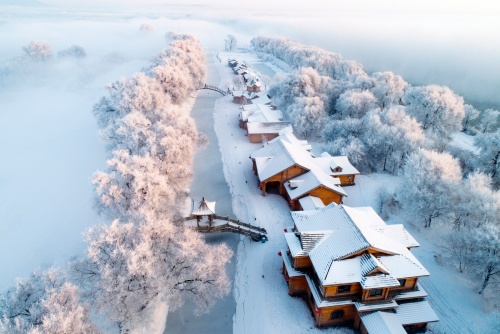
Along the Songhua River, trees can appear to be covered in silver-white flowers. The best-known viewing area is Wusong Island, near Wulajie Town, where river mist, low temperatures and suitable weather conditions can combine to create striking winter scenery.
What Is Rime and Why Does It Form in Jilin?
Rime is not ordinary snowfall. It forms when supercooled water droplets in fog or mist come into contact with surfaces below freezing and turn into ice crystals. Branches, reeds and other exposed surfaces can gradually become coated in white frost, creating the distinctive appearance often called tree rime.
Jilin’s winter conditions along the Songhua River can be favourable for this phenomenon. Water that remains relatively warmer than the surrounding winter air can contribute moisture to the atmosphere. When moist air meets very cold conditions, rime may form on trees along the riverbanks. The result depends on temperature, humidity, wind and other local weather conditions, so a display is never guaranteed.
Rime is especially captivating because it changes throughout the day. Mist may hang over the river, frost gradually builds on branches, and sunlight can make the crystals sparkle. As temperatures rise or conditions change, some of the rime may fall away.
Where to See Rime in Jilin
Wusong Island: The Classic Rime Destination
Wusong Island is a small island on the Songhua River in Wulajie Town, Jilin City. The nearby villages of Hantun and Zengtong are particularly well known for their rime scenery. The river setting and rows of trees along the banks create an atmospheric landscape when conditions are right.
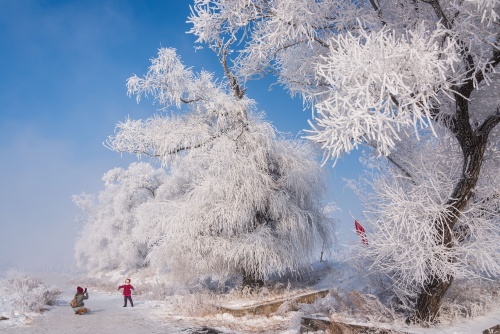
Zengtong is often associated with the local saying, “To appreciate rime, go to Zengtong.” Visitors come to walk along the riverbanks, photograph frost-covered willows and enjoy the quiet scenery of the villages. The area is especially popular with landscape photographers.
Rime Along the Songhua River in Jilin City
Wusong Island is not the only place to look for rime. Sections of the Songhua River around Jilin City can also offer winter views of frost-covered trees. The riverfront provides a more urban setting, while Wusong Island and nearby villages offer a more rural landscape.
The wider Jilin winter experience can also include local food, riverfront walks and other seasonal activities. Jilin can serve as a base for exploring more of the province.
When Is the Best Time to See Jilin Rime?
The commonly recommended viewing season for Wusong Island is from late December to the end of February. The exact timing varies with the weather each year. Cold temperatures, sufficient moisture and relatively calm conditions all help create favourable conditions.
Early morning is generally the best time to look for rime, when temperatures are low and the frost is less likely to have melted or fallen from the branches. Local guidance identifies approximately 10:00 to 11:30 a.m. as a particularly good period for viewing and photography on suitable days. Visitors should check local forecasts and conditions shortly before travelling.
Because rime is a natural weather phenomenon, it cannot be guaranteed on a specific date. Staying in the Jilin area for more than one night can provide additional opportunities to see it if conditions are unfavourable on the first morning.
How to Reach Jilin: From Beijing or Harbin
From Beijing
Travellers from Beijing can take a flight to Changchun and continue to Jilin City, or travel by high-speed rail. From Changchun Longjia International Airport, the airport railway station has direct train services to Jilin; the journey is around 30 to 40 minutes on services that operate on this route. Train schedules and connections should be checked for the intended travel date.
Another option is to travel by high-speed train from Beijing to Changchun and then transfer to a train for Jilin. The total journey time depends on the selected services and transfer interval.
From Harbin
Jilin can also be combined with a visit to Harbin. Direct high-speed trains between Harbin and Jilin take approximately two hours on some services, making it practical to include both destinations in a Northeast China winter itinerary. Actual journey times and departure options vary by date.
Wusong Island is outside central Jilin City, so travellers should allow additional time for the road transfer to the island and nearby villages. Local transport arrangements may vary by season and accommodation location.
Combining Jilin Rime with a Northeast China Winter Trip
For travellers who want to experience more than one side of winter in Northeast China, Jilin can be paired with Harbin. Jilin offers the delicate natural spectacle of rime along the Songhua River, while Harbin is known for its winter architecture, ice-and-snow attractions and city atmosphere.
A route beginning in Beijing can include Changchun and Jilin before continuing to Harbin, or the journey can be arranged in the opposite direction. The best sequence depends on flight availability, train schedules, weather and the number of days available.
Practical Tips for Visiting Wusong Island
Dress for sub-zero temperatures
Wear thermal layers, an insulated coat, warm gloves, a hat and winter footwear with good grip. Riverbanks and paths may be icy.
Go out early
Rime is most likely to be visible during the colder part of the day. Plan to reach viewing areas early and allow time for changing weather.
Keep your itinerary flexible
Rime depends on natural conditions. Check local forecasts and be prepared for the possibility that the display may be limited or absent.
Protect camera equipment
Cold weather can reduce battery performance. Keep spare batteries warm and allow equipment to adjust gradually when moving between cold outdoor air and heated indoor spaces.
Confirm local access and transport
Check seasonal transport, island access, accommodation and viewing arrangements before departure, especially during peak winter periods.
Frequently Asked Questions About Jilin Rime
Q: Where is Wusong Island?
A: Wusong Island is on the Songhua River in Wulajie Town, Jilin City, Jilin Province, Northeast China. Nearby villages such as Hantun and Zengtong are well known for rime viewing.
Q: When can I see rime in Jilin?
A: The usual viewing season around Wusong Island is from late December to the end of February, although the actual timing depends on weather conditions.
Q: What time of day is best for viewing rime?
A: Early morning is generally best. Local guidance identifies around 10:00 to 11:30 a.m. as a rewarding period for viewing and photography when conditions are suitable.
Q: Is rime the same as snow?
A: No. Snow falls from clouds, while rime forms when supercooled droplets in fog or mist freeze onto branches and other cold surfaces.
Q: Can I visit Jilin and Harbin on the same trip?
A: Yes. Direct high-speed trains connect Harbin and Jilin, with some services taking about two hours. Check current schedules when planning the route.
Q: How do I travel to Jilin from Beijing?
A: You can travel by air to Changchun and connect to Jilin by train, or take high-speed rail from Beijing to Changchun and transfer. The best option depends on your dates and connections.
Discover China's Winter Wonders with CITS
From the frost-covered trees of Wusong Island to the ice-and-snow attractions of Harbin, Northeast China offers a variety of winter experiences. Jilin rime is particularly memorable for its quiet beauty: a natural spectacle shaped by the Songhua River, cold winter air and the right weather conditions.
Whether you are planning a dedicated photography trip or adding a winter stop to a wider journey through Northeast China, Jilin offers a distinctive way to experience the season. CITS can help travellers explore winter destinations in China and plan a journey that fits their interests and travel schedule.