
Xinjiang is a region of remarkable contrasts. In summer and autumn, travelers come for its grasslands, deserts, colorful forests, and ancient Silk Road cities. In winter, the landscape changes dramatically. Northern Xinjiang becomes a world of powder snow, frozen rivers, and traditional mountain villages, while southern Xinjiang offers sunny oasis cities, historic streets, and spectacular high-altitude scenery.
A winter journey through Xinjiang can take travelers from the snowy mountains of Altay to the traditional wooden houses of Hemu, then south to Kashgar and the vast landscapes of the Pamir Plateau. Along the way, turquoise alpine lakes, glaciers, and snow-covered mountain peaks reveal a different side of China's northwest.
Whether you enjoy winter sports, landscape photography, cultural discovery, or scenic road journeys, Xinjiang offers a winter experience that goes far beyond skiing.
Northern Xinjiang: A World of Powder Snow and Winter Villages
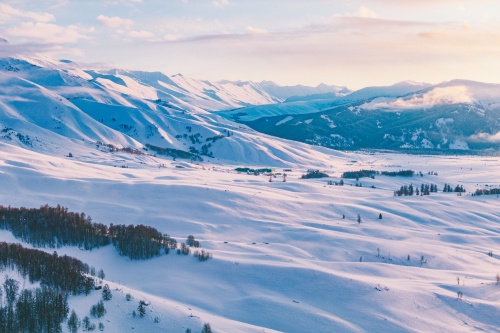
Northern Xinjiang is particularly attractive during the winter months. The Altay Mountains receive abundant snowfall, creating excellent conditions for winter sports and transforming the surrounding forests and villages into striking snowy landscapes.
For travelers, the appeal of northern Xinjiang lies not only in its snow but also in the combination of mountain scenery, traditional settlements, and local cultural heritage.
Altay: China’s Powder Snow Paradise
Altay is one of China’s best-known winter destinations, attracting skiers and snow enthusiasts with its mountainous terrain and natural snowfall. Its winter landscape includes broad snow-covered valleys, forested slopes, and mountain resorts.
Jiangjunshan International Ski Resort, near Altay city, is a popular destination for skiing and snowboarding. Visitors can enjoy different levels of ski runs, mountain views, and night skiing, while the wider Altay region offers opportunities for winter photography and outdoor exploration.
Altay also has a distinctive place in the history of skiing. Traditional wooden skis covered with animal fur were historically used by local people to travel across snowy mountain terrain. This traditional form of winter travel reflects how communities adapted to the natural environment long before modern ski resorts were developed.
For visitors who prefer a more relaxed winter holiday, the surrounding snow-covered landscapes provide opportunities to appreciate the scale and quiet beauty of the Altay Mountains.
Kanas and Hemu: Snow-Covered Forests and Traditional Villages
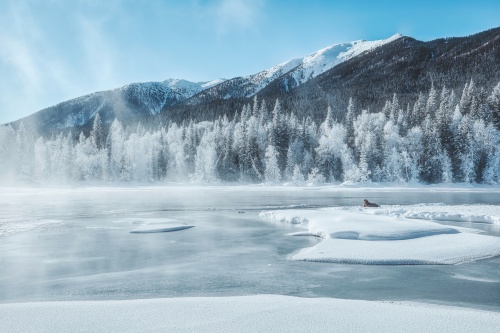
Kanas is famous for its alpine lake, forests, and dramatic mountain scenery. In winter, snow transforms the surrounding landscape into a quieter world of white forests, frozen waterways, and mountain valleys.
The Kanas River winds through the snowy landscape, while frost-covered trees create delicate patterns along its banks. On particularly cold mornings, mist may rise above the water and surrounding forests, creating atmospheric scenes for winter photography.
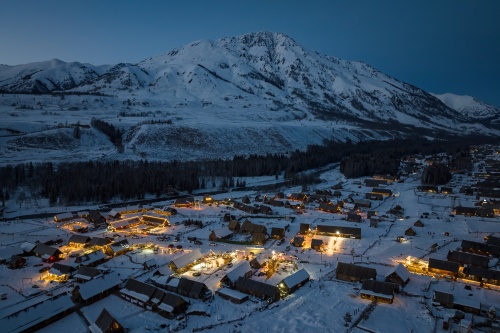
Nearby Hemu Village is another highlight of northern Xinjiang. Traditional wooden houses, snow-covered rooftops, and forested mountains give the village a distinctive alpine character. In winter, warm lights from the houses create a striking contrast with the surrounding snow, particularly in the early morning and evening.
The region is also associated with the cultural heritage of the Tuva people, whose traditional architecture and mountain lifestyle reflect a long relationship with the Altay environment. Visitors can learn about local customs, traditional wooden houses, food, and the history of life in the mountains.
Winter access to Kanas and Hemu can differ from the main summer and autumn travel seasons. Some roads, scenic areas, and accommodation facilities may have seasonal restrictions, so travelers should confirm local operating arrangements before departure.
Southern Xinjiang: Winter Sunshine and Silk Road Culture
While northern Xinjiang is associated with heavy snowfall and freezing temperatures, southern Xinjiang offers a different winter atmosphere. Its oasis cities generally experience drier and comparatively milder conditions, making winter an interesting time to explore historic streets, traditional markets, and local culture.
However, southern Xinjiang is geographically diverse. Once travelers leave the oasis cities and head towards the Pamir Plateau, the elevation rises considerably and winter conditions can become extremely cold.
Kashgar: Discover the Ancient City in Winter
Kashgar is one of the most historically significant cities along the ancient Silk Road. For centuries, it served as an important meeting point for merchants, travelers, and cultural exchanges between China and Central Asia.
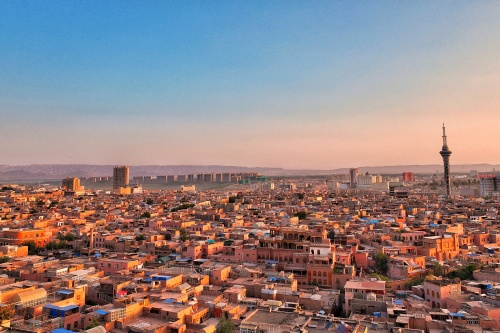
Winter brings a different atmosphere to Kashgar. Compared with the colder northern regions, the city often enjoys relatively mild daytime temperatures and clear, sunny weather.
Kashgar Old Town is an excellent place to explore the city’s cultural heritage. Narrow streets, traditional architecture, carved wooden doors, local bakeries, and handicraft workshops reveal the character of this historic oasis settlement.
Visitors can wander through the old streets, watch traditional bread-making, discover local markets, and sample regional dishes such as lamb kebabs, hand-pulled noodles, and pilaf.
For travelers interested in history and architecture, landmarks such as Id Kah Mosque and the Afaq Khoja Mausoleum offer further insight into the region’s cultural heritage.
The Pamir Plateau: Alpine Lakes and Mountain Wonders
Beyond Kashgar, the landscape changes as the road climbs towards the Pamir Plateau. Known for its dramatic mountain ranges, wide valleys, and high-altitude scenery, the region offers some of the most spectacular landscapes in southern Xinjiang.
The journey itself is part of the experience. The Karakoram Highway passes through vast mountain scenery, connecting Kashgar with the highland landscapes around White Sand Lake and Karakul Lake.
White Sand Lake: Turquoise Waters Beneath Snowy Mountains
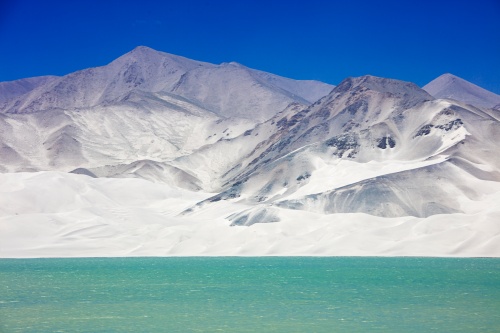
White Sand Lake (Baisha Lake) is one of the most recognizable scenic destinations along the Pamir route. Its turquoise water, pale sandy shores, and surrounding snow-covered mountains create a striking contrast of colors.
The lake is particularly photogenic because of the changing relationship between the water, sand, mountains, and sky. Depending on the season and weather, the surrounding landscape can appear dramatically different, from clear blue mountain reflections to snow-covered slopes.
Karakul Lake and Muztagh Ata: Beneath the Snowy Peaks
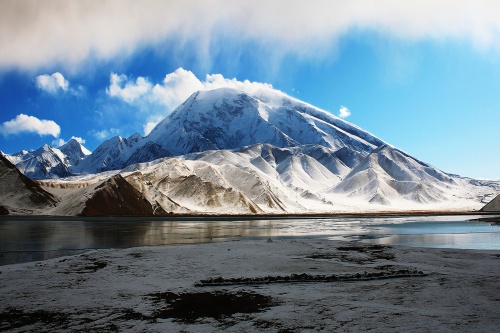
Located beneath the towering peaks of the Pamir Mountains, Karakul Lake is one of the region’s most impressive high-altitude destinations.
The lake is especially famous for its views of Muztagh Ata, often called the Father of Ice Mountains. Rising above the surrounding landscape, its snow-covered summit creates an impressive backdrop for the lake and nearby mountain valleys.
In winter, the surrounding scenery takes on a dramatic alpine character. Snow-covered slopes, icy mountain terrain, and the immense scale of the surrounding peaks make this an unforgettable destination for landscape photography.
Bandir Blue Lake: Another Shade of the Pamirs
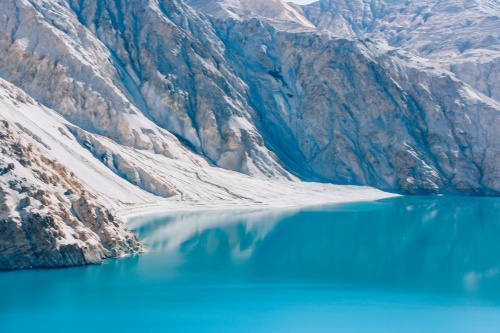
The Pamir Plateau is home to several remarkable alpine lakes, each with its own landscape and color. Bandir Blue Lake is particularly notable for its vivid blue water, which contrasts with the surrounding rugged mountains.
Its distinctive color and dramatic mountain setting offer another perspective on the highland scenery of southern Xinjiang. Including Bandir Blue Lake in a wider Pamir journey adds variety to the experience, moving beyond the better-known viewpoints around White Sand Lake and Karakul Lake.
Glaciers and the High Mountains of Muztagh Ata
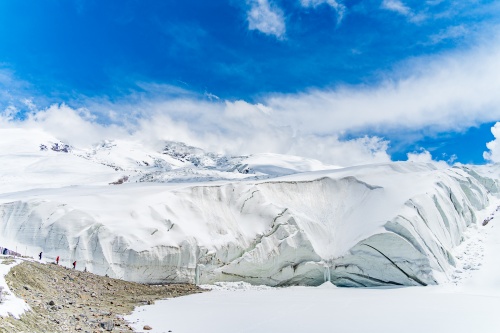
Beyond the lakes, the high-altitude environment of the Pamir Plateau reveals another side of Xinjiang's winter landscape: glaciers and extensive mountain ice formations.
The glacier scenery around Muztagh Ata highlights the scale of the mountain environment and the natural forces that shape the region. For visitors interested in geology, photography, and mountain landscapes, these icy formations offer a striking contrast to the turquoise lakes and open valleys below.
The Pamir Plateau is a high-altitude environment, and winter conditions can be demanding. Temperatures, wind, road conditions, and access arrangements can change quickly. Visitors should allow sufficient time for acclimatization, prepare appropriate winter clothing, and check local travel conditions before departure.
Northern vs. Southern Xinjiang: Two Different Winter Experiences
One of the most interesting aspects of winter travel in Xinjiang is the contrast between its northern and southern regions. Northern Xinjiang offers a classic snowy winter experience, with powder snow, frozen forests, skiing, and traditional mountain villages. Southern Xinjiang combines the cultural heritage of the Silk Road with winter sunshine in its oasis cities and spectacular high-altitude landscapes in the Pamir Mountains.
|
Travel experience |
Northern Xinjiang |
Southern Xinjiang |
|
Main destinations |
Altay, Kanas, Hemu |
Kashgar, White Sand Lake, Karakul Lake |
|
Natural scenery |
Powder snow, forests, snowy villages |
High mountains, alpine lakes, glaciers |
|
Cultural experiences |
Tuva heritage and traditional mountain life |
Silk Road history, local markets, traditional architecture |
|
Outdoor activities |
Skiing, snow photography, village visits |
Mountain sightseeing, cultural walks, landscape photography |
|
Winter atmosphere |
Cold, snowy, alpine |
Comparatively mild in oasis cities; very cold at high altitude |
Travelers with sufficient time may consider combining both regions for a more comprehensive winter journey. However, Xinjiang is geographically vast, and distances between destinations can be considerable. A well-planned itinerary should account for domestic flights, long-distance road transfers, winter road conditions, and the time needed to adjust to different altitudes.
When Is the Best Time to Visit Xinjiang in Winter?
The winter travel season varies depending on the destination.
In northern Xinjiang, December to February is generally suitable for travelers interested in skiing and snowy landscapes. Altay has a long snow season, while Kanas and Hemu offer distinctive winter village scenery. Snowfall and road accessibility, however, vary from year to year.
In southern Xinjiang, Kashgar generally has a drier and relatively milder winter than the northern mountain regions. It is often possible to explore the old town and surrounding cultural attractions during the colder months.
The Pamir Plateau is different. Despite being in southern Xinjiang, its high elevation means that winter temperatures can be extremely low, with strong winds and challenging road conditions.
For this reason, travelers should not assume that all destinations in southern Xinjiang are warm in winter. Kashgar’s urban climate and the high-altitude environment around Karakul Lake can be very different.
Frequently Asked Questions About Winter Travel in Xinjiang
Q: Is Xinjiang worth visiting in winter?
A: Yes. Winter offers a different perspective on Xinjiang, from the powder snow and snowy forests of northern Xinjiang to the historic streets of Kashgar and the dramatic mountain landscapes of the Pamir Plateau.
Q: Where can I experience powder snow in Xinjiang?
A: Altay is one of China’s best-known destinations for natural powder snow and winter sports. Ski resorts such as Jiangjunshan International Ski Resort offer skiing experiences for different ability levels.
Q: Can I visit Kanas and Hemu in winter?
A: Winter visits are possible, but access and operating arrangements may differ from the main tourist season. Travelers should check current road conditions, scenic-area operations, and accommodation availability before planning their trip.
Q: Is Kashgar warm in winter?
A: Kashgar generally has a drier and comparatively milder winter than northern Xinjiang. Sunny days are common, although nights can be cold and temperatures may fall considerably. It is important to bring suitable warm clothing.
Q: Can I visit White Sand Lake and Karakul Lake in winter?
A: Winter visits may be possible depending on weather, road conditions, and local access arrangements. Both destinations are located in a high-altitude mountain environment, where snow, ice, and strong winds can affect travel.
Q: Can northern and southern Xinjiang be combined in one winter trip?
A: Yes. However, the distances are considerable, so a combined itinerary requires sufficient time and careful transport planning. Domestic flights and private road transfers can help connect the major destinations.
Discover the Winter Wonders of Xinjiang with CITS
From the powder snow of Altay and the traditional mountain villages of Kanas and Hemu to the ancient streets of Kashgar and the spectacular alpine lakes of the Pamir Plateau, Xinjiang offers an extraordinary variety of winter experiences.
Whether you are interested in skiing, winter photography, local cultural heritage, or exploring the landscapes of the Silk Road, a winter journey through Xinjiang can reveal a side of the region that many summer visitors never experience.
CITS can help travelers plan journeys through northern and southern Xinjiang, with itineraries tailored to seasonal conditions, travel interests, and available transportation. Whether you prefer to focus on the snowy landscapes of the Altay Mountains or combine Kashgar with the high-altitude scenery of the Pamir Plateau, a carefully planned journey can help you discover the different faces of Xinjiang in winter.
Discover Xinjiang beyond the summer season, where powder snow, ancient traditions, winter sunshine, and mountain landscapes come together.