
In the historic city of Suzhou, gardens are more than decorative spaces. They are carefully composed landscapes that reflect traditional Chinese ideas about nature, art, literature and everyday life.
Why Are the Classical Gardens of Suzhou a UNESCO World Heritage Site?
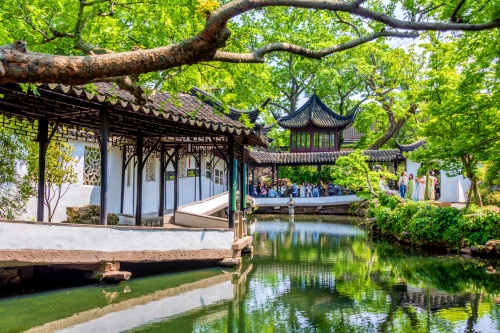
The Classical Gardens of Suzhou were inscribed on the UNESCO World Heritage List in 1997, with an extension in 2000. The World Heritage property includes nine gardens that represent outstanding examples of traditional Chinese landscape design.
The gardens are recognized for their ability to recreate natural landscapes within limited urban spaces. Water, rocks, plants, architecture, calligraphy and decorative arts are combined into carefully balanced compositions. They also reflect the cultural life of traditional Chinese scholars, who used private gardens as places for study, artistic appreciation, social gatherings and personal retreat.
The History of Suzhou’s Classical Gardens
Suzhou was founded as the capital of the Wu Kingdom in the 6th century BCE. Over many centuries, its gardens developed alongside the city’s growth as a center of commerce, literature and artistic culture.
Private gardens became especially prominent during later historical periods. During the Ming and Qing dynasties, garden design reached a remarkable level of sophistication. Wealthy families, scholars and officials commissioned gardens that reflected their personal tastes, literary interests and ideas about living in harmony with nature.
Today, more than 50 classical gardens remain in Suzhou, while nine are included in the UNESCO World Heritage property.
Nine UNESCO-Listed Classical Gardens of Suzhou
Each of the nine gardens has its own character, spatial arrangement and artistic highlights. Together, they demonstrate the diversity and sophistication of classical Jiangnan garden design.
Humble Administrator’s Garden
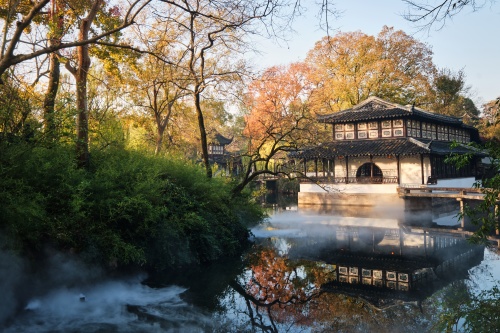
The Humble Administrator’s Garden (Zhuozheng Yuan) is the largest of Suzhou’s classical gardens and one of its most celebrated landmarks. Its design is centered around water, with ponds, islands, bridges, pavilions and carefully arranged vegetation creating a landscape that changes from one area to another. It is particularly known for spacious water scenery and the relationship between architecture and nature.
Lingering Garden
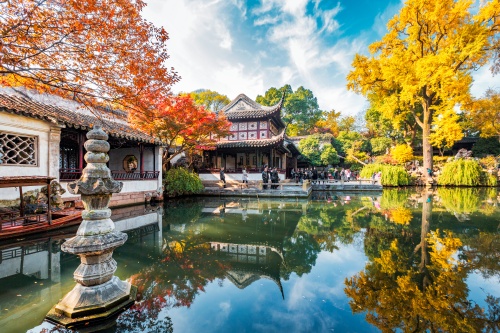
The Lingering Garden (Liu Yuan) is famous for its refined spatial organization and architectural and landscape features. Although relatively compact, it contains distinct garden spaces, including halls, courtyards, rockeries, ponds and covered corridors. Its design makes effective use of framed views and changing perspectives.
Master of the Nets Garden
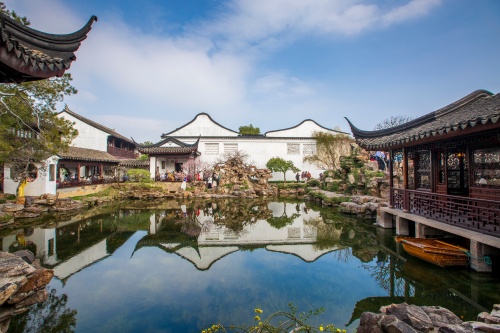
The Master of the Nets Garden (Wangshi Yuan) demonstrates how a relatively small urban space can create an impression of depth and complexity. Its central pond is surrounded by pavilions, halls and corridors, with carefully positioned openings framing different views.
Mountain Villa with Embracing Beauty
The Mountain Villa with Embracing Beauty (Huanxiu Shanzhuang) is especially famous for its artificial mountain landscape. Its rockery evokes a natural mountain environment, with peaks, valleys, pathways and caves arranged within a relatively small area.
Canglang Pavilion
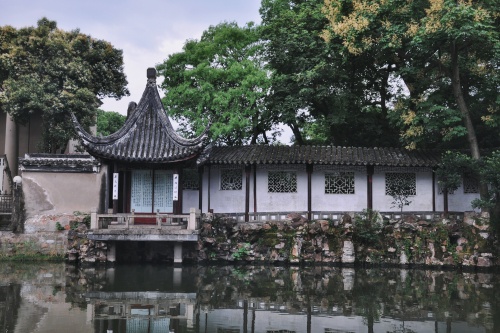
Canglang Pavilion (Canglang Ting) is among the oldest surviving classical gardens in Suzhou, with origins dating to the Northern Song period. Its distinctive covered corridor has windows that frame changing views of the garden and its surroundings.
Lion Grove Garden
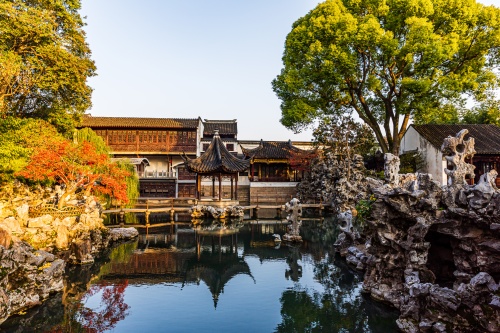
Lion Grove Garden (Shizilin) is renowned for its complex limestone rockeries, whose formations are said to resemble lions. Winding passages, small caves, peaks and narrow pathways create an environment that encourages exploration.
Garden of Cultivation
The Garden of Cultivation (Yipu) is a relatively small garden that reflects the restrained elegance of classical Suzhou design. Its pond, rockeries, plants and traditional buildings create a quiet and balanced environment.
Couple’s Retreat Garden
The Couple's Retreat Garden (Ou Yuan) is distinctive for its layout and relationship with the surrounding urban environment. Its two main sections use water, architecture and planting to create interconnected spaces.
Retreat & Reflection Garden
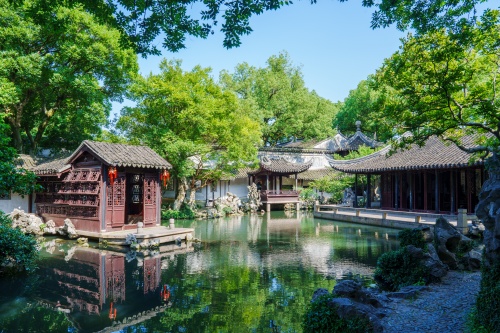
The Retreat & Reflection Garden (Tuisiyuan) is located in Tongli, a historic water town within the Suzhou region. Its pavilions, courtyards, plants and water features create a quiet atmosphere and reflect the refined aesthetics of Jiangnan garden culture.
The Philosophy and Art of Suzhou Gardens
Recreating Nature in Miniature
One of the most distinctive characteristics of Suzhou gardens is their ability to evoke vast natural landscapes within limited spaces. A pond may suggest a lake, a rockery may represent a mountain range, and carefully placed trees may create the impression of a forest. This approach reflects the traditional Chinese idea of understanding nature through observation and artistic interpretation.
Borrowed Scenery and Framed Views
Borrowed scenery, known as jie jing, is an important technique in classical Chinese garden design. Through windows, doorways, corridors and carefully positioned openings, designers incorporate views of distant buildings, trees or surrounding landscapes into the garden's composition. A view that appears ordinary from one position may become a carefully composed landscape when seen through a circular doorway or framed window.
The Relationship Between Architecture and Landscape
In Suzhou gardens, architecture is not separate from nature. Pavilions, covered corridors, bridges and halls are positioned to complement water, rocks and vegetation. Buildings provide places for reading, conversation and rest, while also serving as viewing platforms.
Poetry, Painting and Garden Design
Traditional Chinese gardens were closely connected with literature, calligraphy and landscape painting. Garden names, inscriptions, architectural details and carefully composed views often carry literary meanings. The landscape itself can be understood as a three-dimensional interpretation of traditional Chinese painting.
How to Explore Suzhou’s Classical Gardens
For international visitors, Suzhou’s gardens are best experienced at a relaxed pace. Rather than rushing between every attraction, it is worth spending time observing how the landscape changes from different viewpoints.
The Humble Administrator’s Garden and Lingering Garden are excellent starting points for understanding the scale and artistic complexity of Suzhou's classical gardens. The Master of the Nets Garden offers a more intimate experience, while Lion Grove Garden is particularly interesting for its rockeries.
Beyond the gardens, Suzhou offers a rich cultural experience. Traditional canals, historic streets, local cuisine, silk heritage and classical architecture provide additional ways to understand Jiangnan culture. Visitors can also explore nearby water towns such as Tongli.
Frequently Asked Questions About the Classical Gardens of Suzhou
Q: How many Suzhou gardens are included in the UNESCO World Heritage property?
A: Nine classical gardens are included in the UNESCO World Heritage property. They were inscribed in 1997 and extended in 2000.
Q: Which is the most famous garden in Suzhou?
A: The Humble Administrator's Garden is often considered the most famous and is the largest of Suzhou's classical gardens. Lingering Garden, Master of the Nets Garden and Lion Grove Garden are also major attractions.
Q: Why are Suzhou gardens important to Chinese culture?
A: They reflect traditional Chinese ideas about nature, landscape painting, literature and architecture. They also provide insight into the cultural and intellectual life of traditional Chinese scholars.
Q: How much time should I spend visiting Suzhou's gardens?
A: One day allows visitors to explore several major gardens, while two days provide a more relaxed experience and time to discover nearby historic streets and water towns.
Q: What is borrowed scenery in Chinese garden design?
A: Borrowed scenery is a technique in which views beyond a garden's immediate boundaries are incorporated into its visual composition through windows, doorways, corridors or carefully positioned openings.
Q: Can I visit Suzhou's classical gardens throughout the year?
A: The gardens can be visited in different seasons, each offering a distinct atmosphere. Spring brings fresh blossoms, summer highlights water and lush vegetation, autumn offers changing foliage, and winter reveals architectural details and quieter scenery. Visitors should check individual garden opening hours before travelling.
Discover Suzhou's Classical Gardens with CITS
Exploring the Classical Gardens of Suzhou is an opportunity to experience one of China’s most distinctive cultural traditions. From the expansive water landscapes of the Humble Administrator’s Garden to the intricate rockeries of Lion Grove Garden and the refined spaces of the Master of the Nets Garden, each garden reveals a different aspect of traditional Chinese aesthetics.
For travelers interested in history, architecture, philosophy and local culture, Suzhou is an essential destination within a wider journey through eastern China. CITS can help travelers combine Suzhou’s classical gardens with other highlights of the Jiangnan region, including Shanghai, Hangzhou and traditional water towns.