
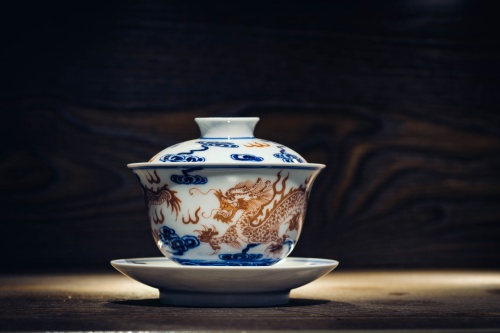
The inscription of the Jingdezhen Handicraft Porcelain Industry Sites onto the UNESCO World Heritage List marks a monumental milestone in global cultural preservation. Inscribed during the 48th session of the World Heritage Committee in Busan, Republic of Korea, this designation marks China’s 61st World Heritage site, its first industrial heritage site, and the world’s very first World Heritage site themed around porcelain.
Nestled in the hilly countryside of Jiangxi Province, Jingdezhen presents an extraordinary, living record of an intact handicraft industrial ecosystem that spanned from the 10th to the 19th centuries. From ancient kaolin mining pits and river transport routes to imperial kilns and thriving modern artisan communes, Jingdezhen offers an unmatched, authentic dive into living history.
What Do the Inscribed Jingdezhen Sites Cover?
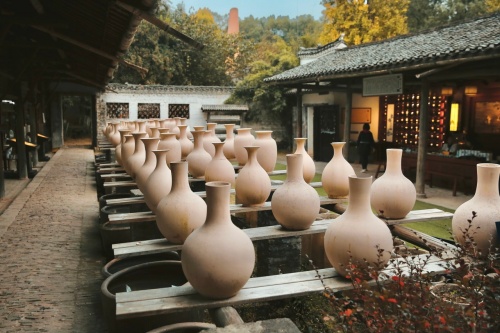
The serial World Heritage property spans a total heritage zone of 1979 hectares with a 5545.7 hectare protective buffer zone. It comprises five geographically scattered but functionally linked component parts across Jingdezhen City, each fulfilling an essential role in the historic ceramic production chain:
Town Area Porcelain Production Center: Situated in downtown Jingdezhen, this center preserves tangible relics of an intensive porcelain manufacturing system that took shape during the Song (960-1279 AD) and Yuan (1271-1368 AD) dynasties and flourished through the Ming (1368-1644 AD) and Qing (1644-1911 AD) dynasties.
Hutian Ancient Kiln Site: Served as the primary kiln complex for Jingdezhen’s handmade porcelain industry during the Song and Yuan periods.
Gaoling Porcelain Clay Mining Site & Changling Porcelain Stone Mining Site: The Gaoling site was the world’s most famous source of kaolin raw materials during the Ming and Qing eras, while Changling provided key porcelain stone and glaze stone.
Jiaotan Firewood Production Area: Preserves an intact logging and waterborne transport system that supplied wood fuel to kilns along local riverways throughout the Ming and Qing eras.
Together, these components encompass not only tangible ancient kilns and mining pits, but also the intangible social orders, production techniques, and industrial organization that defined China’s ceramic capital.
Outstanding Universal Value: How Jingdezhen Shaped Global Art
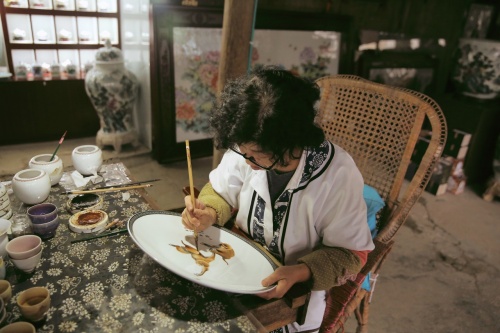
Jingdezhen stands as an exceptional testimony to the evolution of global ceramic craftsmanship. Its worldwide impact rests on key technological and artistic breakthroughs:
The Binary Formula Innovation: Over 700 years ago, Jingdezhen artisans pioneered a precise formula combining kaolin (China clay) with porcelain stone. This allowed clay to endure firing temperatures exceeding 1300℃ without deformation, revolutionizing ceramic durability.
Mastery of World-Famous Styles: From the Song Dynasty—when Emperor Zhenzong bestowed his reign title, Jingde, upon the town in 1004 AD—to the Yuan Dynasty, local craftsmen mastered iconic blue-and-white porcelain (Yuan Qinghua) and later famille-rose porcelain, dominating global ceramic exports for centuries.
The Global Epicenter (16th - 18th Centuries): Serving as the world’s porcelain production center, Jingdezhen’s exports heavily influenced European “chinoiserie” aesthetics and established blue-and-white porcelain as a universal vehicle of Oriental art.
From Historic Industrial Ruins to a Living “Porcelain Capital”
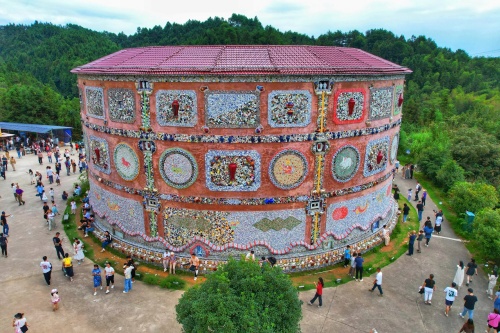
Jingdezhen’s heritage is not merely a static museum; it is a thriving, modern creative center. Following the closure of 10 large state-operated factories in the late 1990s, local authorities initiated preservation efforts in 2012 to restore the brick factories and historic space rather than demolishing them.
Today, Jingdezhen’s ceramic industry chain employs over 100,000 people and is home to more than 3200 inheritors of intangible cultural heritage. Through initiatives like the Taoxichuan cultural district and its “Migratory Bird Program,” Jingdezhen has attracted over 3600 international artists and a growing community of young creators known as Jingpiao, cementing its status as a UNESCO Creative City of Crafts and Folk Art.
The Grand UNESCO Triangle Route: Jingdezhen, Mount Sanqing & Huangshan

To truly appreciate the natural beauty and cultural depth of East China, travelers can link Jingdezhen with two of China’s most breathtaking UNESCO Natural World Heritage mountain ranges: Mount Sanqing and Huangshan (Yellow Mountain).
Starting and ending in the international hub of Shanghai, this seamless overland journey connects imperial porcelain history, picturesque Hui-style rural villages, and granite mountain peaks:
Shanghai → Jingdezhen: Rapid high-speed train connection directly into the porcelain capital to explore ancient kiln sites and the Taoxichuan creative district.
Jingdezhen → Mount Sanqing: Venture east to Mount Sanqing, a UNESCO World Heritage site celebrated for its granite pillars, mist-shrouded pine forests, and Taoist cultural relics.
Wuyuan Countryside: Wander through the historic villages of Wuyuan, famous for ancient Hui-style architecture, stone bridges, and tranquil rural landscapes.
Huangshan (Yellow Mountain) → Shanghai: Ascend the iconic peaks of Mount Huangshan (UNESCO World Heritage) to witness sunrise over cloud seas before returning comfortably to Shanghai.
Explorer's Tip: To experience this curated journey with dedicated private guides, premium transfers, and seamless coordination across all three UNESCO sites, explore our flagship route: Jingdezhen Porcelain Tour with Mount Sanqing & Huangshan Discovery.
Frequently Asked Questions: Jingdezhen World Heritage Travel
Q: Why is Jingdezhen’s UNESCO inscription historically significant?
A: Jingdezhen is the first World Heritage site in the world themed around porcelain and the first industrial heritage site nominated by China. It officially recognizes a 1000-year continuous ecosystem of handicraft production that transformed global artistic traditions and international trade.
Q: How many days should travelers spend in Jingdezhen?
A: A 2-to-3 day stay in Jingdezhen provides ample time to explore the main UNESCO sites and local artisan culture. Visitors can comfortably tour the Town Area Porcelain Production Center, visit ancient kiln sites, explore the Taoxichuan creative district, and participate in hands-on ceramic workshops.
Q: Is Jingdezhen easy to access from major cities like Shanghai or Huangshan?
A: Yes, Jingdezhen is directly connected to Shanghai, Hangzhou, and Huangshan via China’s modern high-speed rail network. Travel time from Huangshan is approximately 35 minutes, making it an ideal cultural addition to a Yellow Mountain or East China tour itinerary.