
Beijing is one of the few global capitals where a stroll through the city feels like traversing millennia of design history. Designated as a UNESCO World Capital of Architecture for 2029, China’s cultural capital offers an unmatched physical narrative: vast imperial palace complexes aligned along ancient cosmic axes stand in harmonious dialogue with bold 21st-century architectural icons and revitalized industrial heritage parks.
Whether you are a design enthusiast, a photography lover, or a culture seeker, understanding Beijing’s architectural evolution unlocks the true essence of China’s historical depth and modern ambition.
The Imperial Backbone: The UNESCO Beijing Central Axis
At the heart of Beijing’s design philosophy lies the Central Axis (Zhongzhouxian), a 7.8-kilometer urban backbone established in the 13th century during the Yuan Dynasty and refined through the Ming and Qing Dynasties. Built to embody traditional Chinese philosophy, cosmic order, and political harmony, this axis orders the entire city layout.
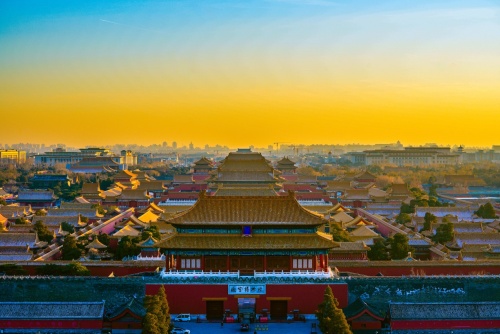
The Forbidden City (Palace Museum): The world’s largest surviving wooden palace structure, featuring symmetrical royal courtyards, sweeping golden-tiled roofs, and intricate bracket sets (dougong) built entirely without nails.
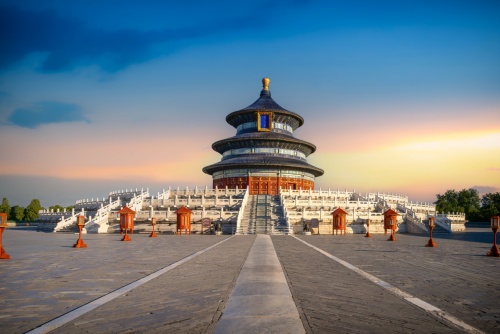
The Temple of Heaven: Celebrated for its triple-gabled Circular Mound and the Hall of Prayer for Good Harvests, showcasing exquisite timber-frame construction and circular geometry representing the heavens.
Jingshan Park Overlook: Positioned directly north of the palace on the central axis, offering the premier panoramic viewpoint over the golden rooflines of the Forbidden City and the surrounding historical urban grid.
The Futuristic Revolution: Modern Architectural Marvels
Since hosting the 2008 Summer Olympics and continuing into the modern era, Beijing has become an international canvas for global avant-garde architecture, seamlessly integrating futuristic engineering into its ancient cityscape.
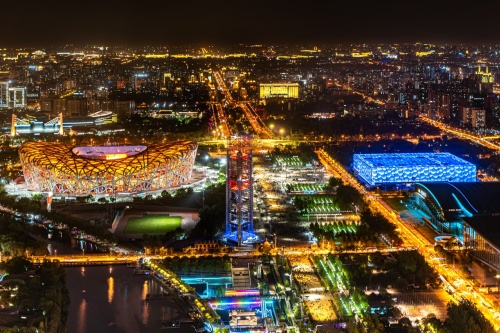
Beijing National Stadium (The Bird’s Nest): Engineered by Herzog & de Meuron, this massive structural steel network forms an iconic, lattice-like bowl that stands as a masterpiece of modern sports architecture.
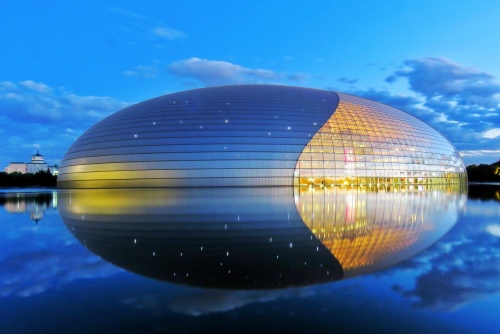
National Centre for the Performing Arts (The Giant Egg): Designed by French architect Paul Andreu, this titanium-and-glass dome appears to float serenely on an artificial lake, creating a striking aesthetic contrast near Tiananmen Square.
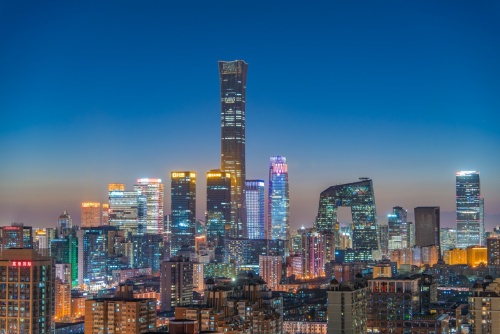
CCTV Headquarters: Rem Koolhaas’s radical loop structure redefined skyline engineering, challenging traditional skyscraper forms with its continuous three-dimensional structural grid.
Living Heritage & Urban Revitalization
Beyond monumental palaces and futuristic towers, Beijing’s architectural identity is deeply tied to its residential quarters and industrial regeneration projects.
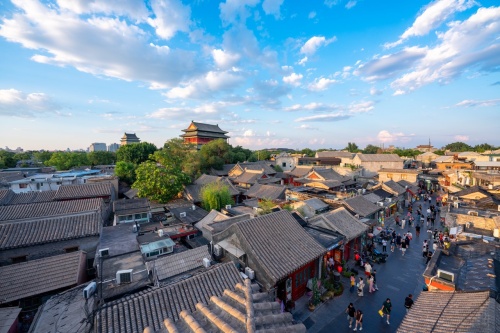
Siheyuan Courtyards & Hutong Networks: Traditional single-story residential compounds connected by narrow alleyways. Today, thoughtful urban renewal projects have converted historical hutongs into boutique heritage spaces, tea houses, and modern art galleries without disrupting local community life.
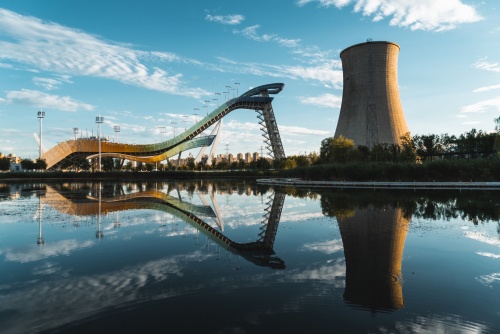
Shougang Park (Industrial Heritage Renewal): A former state-owned steel plant transformed into a green urban sports and culture district. Featuring the iconic Big Air Shougang jump framed by industrial cooling towers, it serves as a world-class global benchmark for industrial heritage adaptive reuse.
Architectural Discovery Routes & Curated Private Tours
For travelers wishing to experience Beijing’s architectural contrast firsthand, CITS offers tailored private journeys linking ancient heritage with seamless modern transit:
In-Depth Capital & Heritage Focus: To immerse yourself in the UNESCO Central Axis, ancient timber craftsmanship, and courtyard preservation, discover our dedicated Beijing Central Axis & Heritage Private Tour.
Industrial Heritage & Shougang Park Focus: To explore Beijing’s urban transformation firsthand with a dedicated focus on Shougang Park’s steel-plant reuse and Winter Olympic landmarks, check out our Beijing Winter Olympic Venue Shougang Park Tour.
Trans-China Comprehensive Architecture Circuit: To expand your architectural journey across China’s regional masterworks, ancient wooden temples, and modern metropolises, explore our flagship China Architecture Tour.
Frequently Asked Questions: Beijing Architecture Travel
Q: Why is Beijing recognized globally for its architecture?
A: Beijing is recognized for its unique capability to preserve a 3,000-year-old urban plan while embracing cutting-edge contemporary design. From the UNESCO-listed Central Axis and imperial timber structures to bold 21st-century landmarks and industrial heritage revivals, Beijing offers an unmatched, living timeline of world architectural history.
Q: What is the best way to explore traditional Hutong architecture in Beijing?
A: The best way to explore Beijing’s hutongs is through a guided walking or cycle tour around the Shichahai or Nanluoguxiang historical blocks. Walking with a private local guide allows visitors to step inside restored Siheyuan courtyards, admire traditional carved archways, and understand the historical social structure behind these ancient alleyways.
Q: How many days are recommended to see Beijing’s top architectural sights?
A: A stay of 3 to 4 days provides ample time to experience Beijing’s architectural highlights. This allows visitors to dedicate full days to imperial landmarks (Forbidden City, Temple of Heaven, Summer Palace), contemporary Olympic and modern icons, and historical courtyard neighborhoods.