
Worried about doing the wrong thing while exploring China? It is completely natural to experience a bit of cultural anxiety when landing in a country with thousands of years of tradition. However, there is one universal truth you should know first: Chinese people are exceptionally warm and hospitable to international guests. Minor etiquette mistakes are always viewed with grace and understanding.
To help you blend in like a seasoned traveler in 2026, here is a practical guide to unlocking the subtle codes of Chinese social etiquette.
Cracking the Code of Daily Interactions
The Hidden Vocabulary of Chinese Hand Gestures (6 to 10)
While counting from 1 to 5 with your fingers is universal, counting from 6 to 10 in China requires only one hand. Master these to communicate seamlessly at local markets or restaurants.
The Cultural Shock: Seeing a local hold up a “phone” gesture doesn’t mean they want you to call them—it means the number 6.
The Ritual:
6 (Liù): Extend the thumb and pinky finger (resembling a phone).
7 (Qī): Pinch your thumb, index, and middle fingers together pointing forward.
8 (Bā): Make an "L" shape with your thumb and index finger (resembling a pistol).
9 (Jiǔ): Hook your index finger into a "C" shape while curling the rest.
10 (Shí): Cross your index fingers into an "X" shape, or simply make a closed fist.





Lazy Susan Etiquette: The Art of the Rotating Table
Dining in China is inherently communal, designed around a revolving glass turntable known as the “Lazy Susan.”
The Cultural Shock: Food is placed in the center to be shared by everyone, which can feel intimidating if you are used to individual plating.
The Ritual: Never spin the table while someone else is actively scooping food. Wait until they finish, then rotate the wheel slowly clockwise. It is also a polite gesture to spin a newly arrived signature dish toward the guest of honor first.
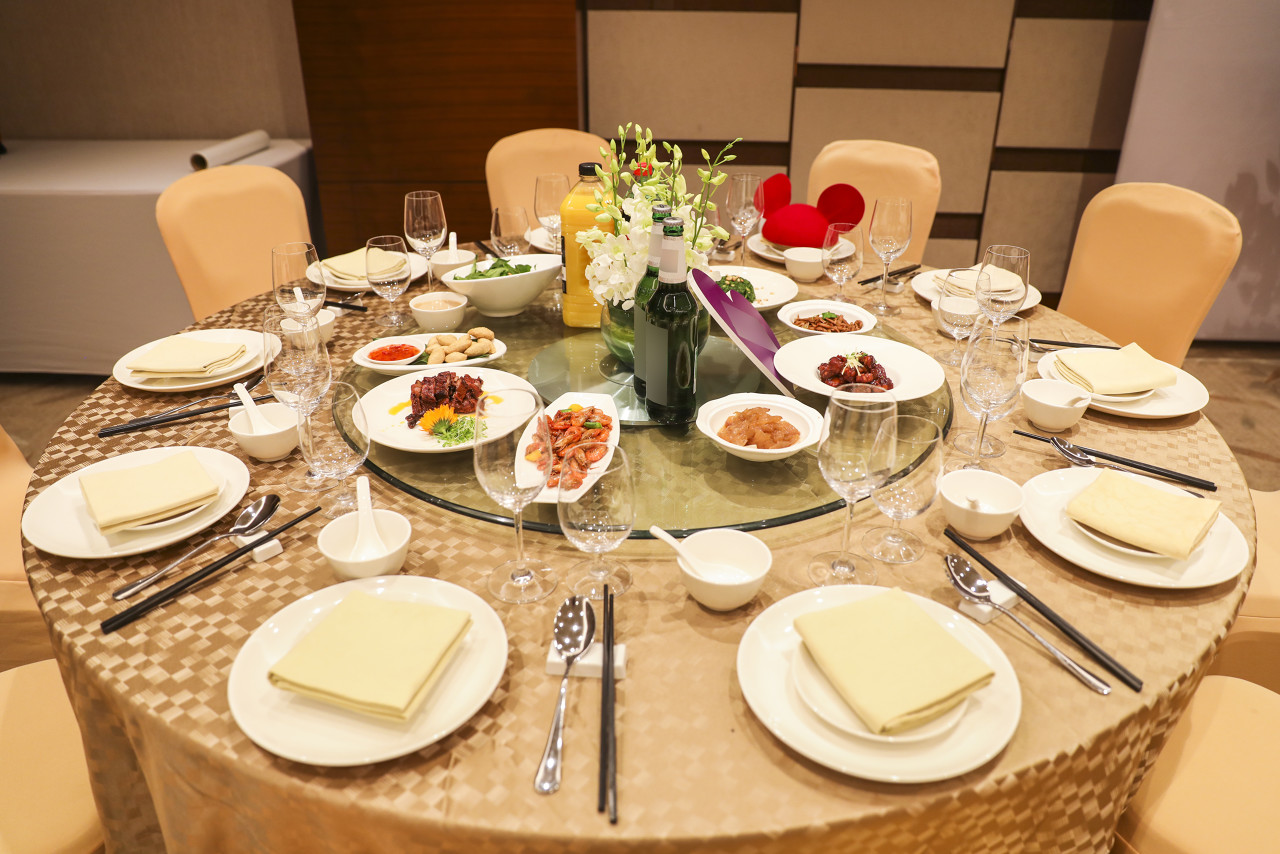
Pro Tip: When enjoying regional delicacies like Sichuan Hotpot or Beijing Roast Duck, using the serving chopsticks (Gōng Kuài) provided in the center to transfer food to your plate is highly appreciated.
The Naming Culture: How to Address Locals Politely
In China, names and titles carry deep respect, and the order is reversed: Surname comes first, followed by the given name.
The Cultural Shock: Addressing a guide, driver, or hotel clerk by their first name can sometimes feel overly familiar in a professional setting.
The Ritual: When in doubt, use a title. Address your professional contact by their Surname + Title (e.g., Manager Wang or Teacher Li). For everyday interactions with hospitality staff, a warm "Nǐ hǎo" (Hello) combined with a slight nod is perfect.
Pro Tip: If you are coordinating your regional trains or transfers through our local teams in Shanghai or Xi’an, your dedicated guides will always introduce themselves with the most comfortable way for you to address them.
Practical Etiquette Q&A for Inbound Travelers
Q1: What should I do if a local offers me a business card or a gift?
Always accept it with both hands. This simple physical gesture shows that you value the interaction and respect the giver. Take a moment to look at the card before putting it into your pocket or bag.
Q2: Is tipping required or expected in taxi cabs or local restaurants?
No. Tipping is not a part of Chinese culture. The price displayed on your digital bill or the taxi meter is exactly what you pay. Attempting to leave extra cash on the table might cause confusion, as servers will often run after you to return the “forgotten” money.
Q3: How do I handle a toast during a formal dinner or banquet?
If someone raises a glass to toast you, hold your glass with both hands. To show deep respect, ensure the rim of your glass is slightly lower than the rim of the host’s glass when clinking them together. If you do not drink alcohol, it is completely acceptable to toast with tea or juice.
Q4: How can I deal with language barriers during a social misunderstanding?
A warm smile and a polite phrase go a long way. Download a translation app on your phone beforehand. If you need to express gratitude or apologize, simply say “Xièxie” (Thank you) or “Bù hǎoyìsi” (Excuse me / Sorry)—locals will instantly appreciate your effort.
Embark on a worry-free journey across China. Explore our seamless cultural itineraries at www.cits.net.